Laminate flooring installation problems can arise from the supporting floor, product selection, moisture, restricted movement or fitting quality. Similar symptoms can also occur because of building conditions, wear or accidental damage. A photograph alone cannot establish the cause or who is responsible. An assessment against the actual product instructions and site conditions is the best starting point.
Laminate boards commonly have a wood-fibre core and a decorative wear surface. Floating laminate floors rely on the boards remaining connected while the overall floor can accommodate normal changes in the indoor environment. Good preparation matters just as much as a neat finished appearance. If you are planning new work, our professional laminate flooring installation service in Melbourne explains the scope of laying, preparation and finishing.
Common laminate floor problems at a glance
Use this table to describe what you can see or hear. The examples are possible explanations, not a diagnosis.
1. Why is my laminate flooring buckling or lifting?
Buckling is a noticeable upward deformation of the floor. It may occur in the middle of a room, near a doorway or beside fixed cabinetry. A floating laminate floor needs room for dimensional changes as the indoor climate varies. Restrictions at walls, trims or fixed objects can contribute to pressure within the connected floor. Moisture exposure can also cause swelling.
Not all raised flooring is an expansion issue. An uneven support surface or a product defect may produce a similar appearance. A professional can evaluate the layout, visible damage, product requirements and environmental conditions before recommending a remedy. A raised floor is also a trip hazard; avoid walking on the affected area and do not attempt to force the boards flat.
See our laminate flooring installation tolerances and quality guide for information on the relationship between movement clearances, transitions and installation quality.
2. Gaps between laminate floorboards and uneven joints
Open joints are different from an intentional decorative bevel. A bevel is part of the board design, while a newly opened seam may indicate movement or a damaged connection. Small seasonal changes may occur in some products; persistent, widening or repeated gaps deserve attention.
Raised edges can also indicate swelling or mismatch at the joint. The assessor will need to distinguish the product's original appearance from changes after fitting. Keep the packaging or product information if available, and photograph the same location over time. Do not fill the seams or attempt to join boards forcibly before the cause is understood.
3. Laminate flooring squeaking, clicking or moving underfoot
A floating floor has a different feel and sound from a floor permanently bonded to its supporting surface. An occasional sound is not proof of faulty workmanship. Repeated clicking at the same spot, pronounced movement or noises that develop with new gaps are more useful observations to report.
Possible contributors include an irregular or unstable supporting floor, incompatible underlay, a stressed connection between boards or movement restrictions. Underlay choice is specific to the product and does not replace an adequately prepared substrate. Read our laminate flooring over tiles, concrete and timber guide for substrate considerations.
In apartments, noise heard by neighbours may also relate to the acoustic performance of the complete floor and ceiling system, rather than only the laminate boards. Product specifications and building-specific acoustic requirements matter when assessing a complaint.
4. Swollen laminate boards and moisture damage
Moisture problems may show as thickened edges, distorted planks or changes near kitchens, external doors and plumbing. Moisture can originate above or below the floor; an old concrete slab is not automatically dry, and a water-resistant product is not a substitute for a suitable building waterproofing system.
If a small spill is safe to clean, promptly absorb it and follow the manufacturer's care advice. For substantial water entry, a suspected leak or a wet area near electrical equipment, avoid the affected area and arrange appropriate professional assistance. The water source must be investigated before replacement flooring is considered.
Different laminate products have different moisture warranties and permitted uses. Ask for the exact product documentation rather than assuming all laminate can tolerate the same exposure.
5. Scratches, chipped edges and damaged laminate surfaces
Damage to the wear surface may be unrelated to floor laying. Abrasion from grit, furniture movement or impact can affect the decorative finish even on a hard-wearing floor. A scratch-resistant surface is not scratch-proof. Unlike solid timber flooring, a typical laminate surface cannot be restored by sanding and refinishing.
Minor cosmetic damage may have a manufacturer-approved repair option, while more substantial damage may require replacement of affected boards. The availability of matching stock, product age, board condition and floor layout can all affect the practical options.
What to document before contacting a laminate floor installer
Good information can make a conversation with your installer or flooring supplier more productive. Collect the following without disturbing the flooring:
- The product name, colour, batch details and original invoice if available.
- The installation date and whether the boards were supplied separately.
- Photographs showing the affected area and the surrounding room.
- When the symptom first appeared and whether it changes with weather or use.
- Any recent leaks, renovations, changes to heating or unusual building conditions.
- Original installation quotation, preparation scope, warranty and care documents.
Keep dated records and contact the original installer or supplier before commissioning alterations if you intend to raise a warranty concern. Do not remove trims, boards or suspected hazardous old floor coverings to investigate yourself. Where required, an appropriately qualified flooring or building professional can arrange further assessment.
Can laminate flooring problems be repaired, or is replacement needed?
The answer depends on the cause and extent of damage. A localised surface mark is not the same as widespread swelling, a damaged locking system or an underlying building problem. A replacement floor may repeat the same issue if the source has not been addressed. The original installation documents and available matching boards also influence the options.
Ask for an itemised scope explaining whether the proposal is an inspection, removal, preparation, replacement or finishing work. Our laminate flooring installation cost guide explains the factors that can affect a new installation quotation. Top Wood can discuss new or replacement flooring work, subject to the property and scope; an independent inspection may be appropriate for disputed defects.
Product warranties and workmanship warranties are different. Australian Consumer Law consumer guarantees may also apply independently of written warranty terms. See the ACCC's consumer rights information in the references below.
How professional laminate floor layers help reduce installation problems
Before a new project, agree on the product, installation scope, suitability of the substrate, compatible accessories and finishing details. Ask how the proposed floor layout and any building requirements will be considered. A clear quotation and product-specific plan reduce uncertainty for the customer and installer.
After handover, follow the actual manufacturer's maintenance instructions, retain spare boards where practical and keep warranty documents. Use the laminate flooring installation checklist to prepare for your project and record the items to discuss with your installer.
Examples of completed Top Wood laminate installations
These genuine Melbourne and Yarra Glen project photographs show completed timber-look laminate flooring. They illustrate finished work, not defects or documented repair cases.
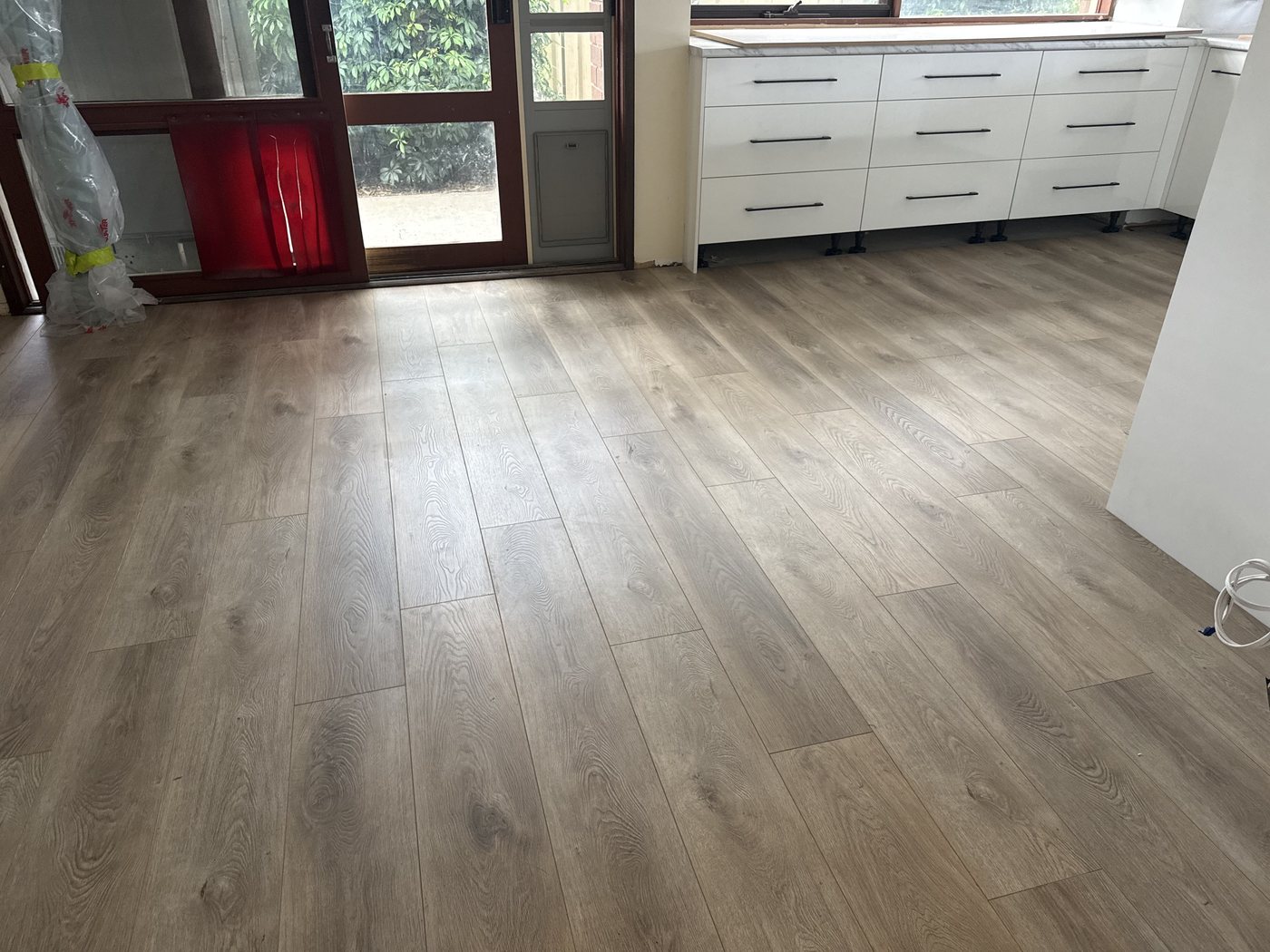 Completed Melbourne laminate flooring project.
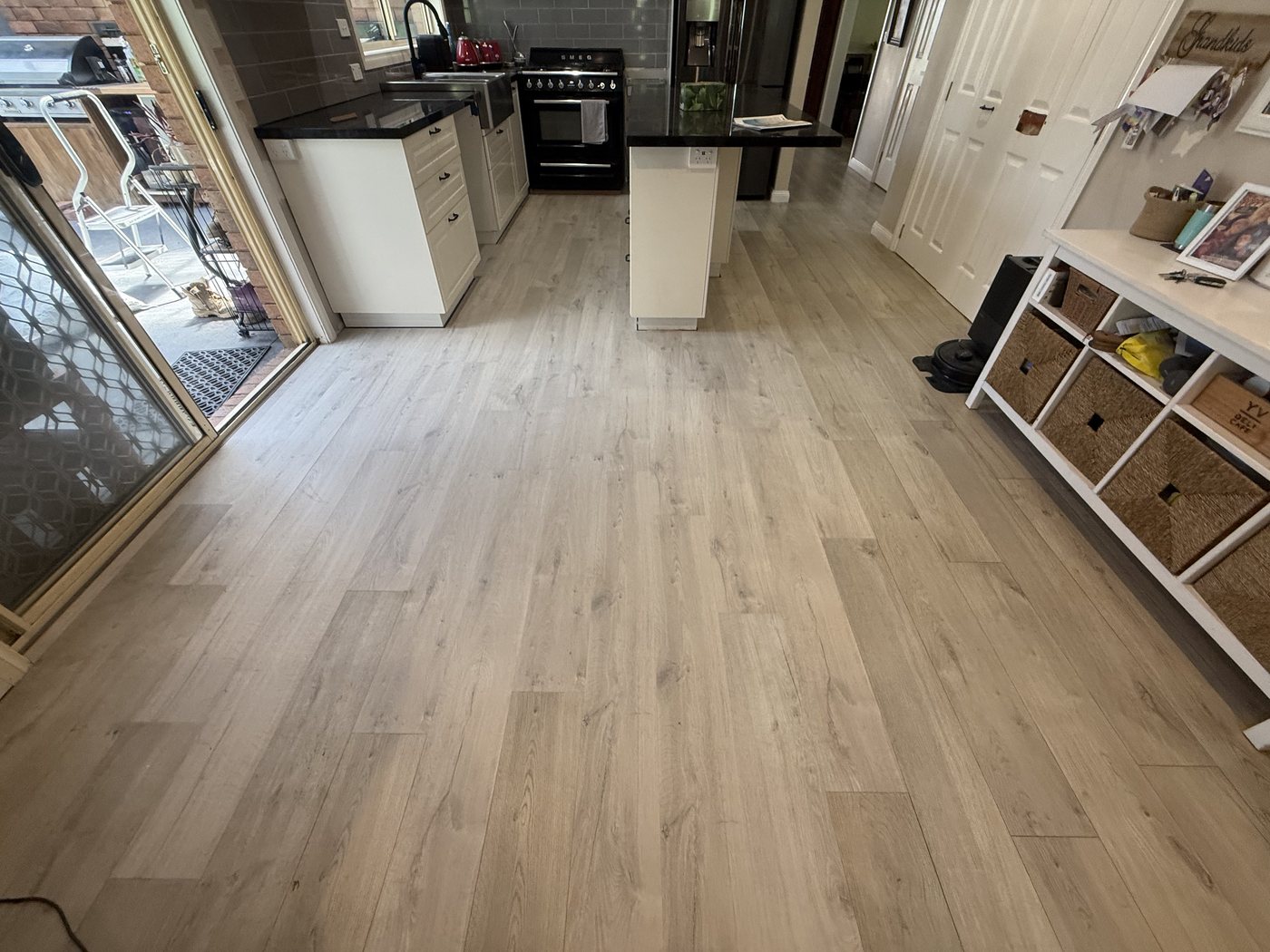 Completed Yarra Glen laminate flooring project.
See more real installation examples on our laminate floor layers and installers Melbourne page.
Frequently asked questions about laminate floor problems
Is laminate floor movement always a defect?
No. Some movement may be associated with the floating system and product characteristics. Pronounced or increasing movement warrants assessment against the product requirements.
Why are gaps appearing after installation?
Seasonal conditions, installation quality, board connections or substrate conditions may contribute. The pattern and timing of the gaps help a professional investigate.
Can a thicker laminate board fix an uneven subfloor?
No. Thickness does not remove the requirement for an adequately flat, stable and suitable supporting surface.
Does waterproof laminate mean leaks cannot damage the floor?
No. Product water-resistance claims have conditions and do not establish that the entire building floor is waterproof. Leaks or water from below need separate assessment.
Can damaged laminate flooring be sanded and polished?
Generally no. The decorative surface is not a solid timber wear layer. Ask the supplier about approved repair or replacement options.
Should I contact the original installer or product supplier first?
Start with your purchase and installation documents. Report the problem promptly to the relevant business and retain evidence before changes are made.
Do you install replacement laminate flooring in Melbourne?
Top Wood can discuss replacement installations, including separately quoted removal and preparation where appropriate. Contact us with your suburb, floor area and project details.
Planning a new or replacement laminate floor in Melbourne?
Speak with Top Wood about professional laminate floor installation, installation-only fitting and supply-and-install options. Tell us the existing floor type, approximate area and the work you need.
Further reading and technical references
Manufacturer guidance varies by product. These public references provide examples of the factors discussed above; they are not universal installation specifications or a substitute for the chosen product documentation.
General homeowner information only. The condition of a specific floor cannot be determined online; obtain appropriate professional assessment and consult the applicable product and warranty documentation.