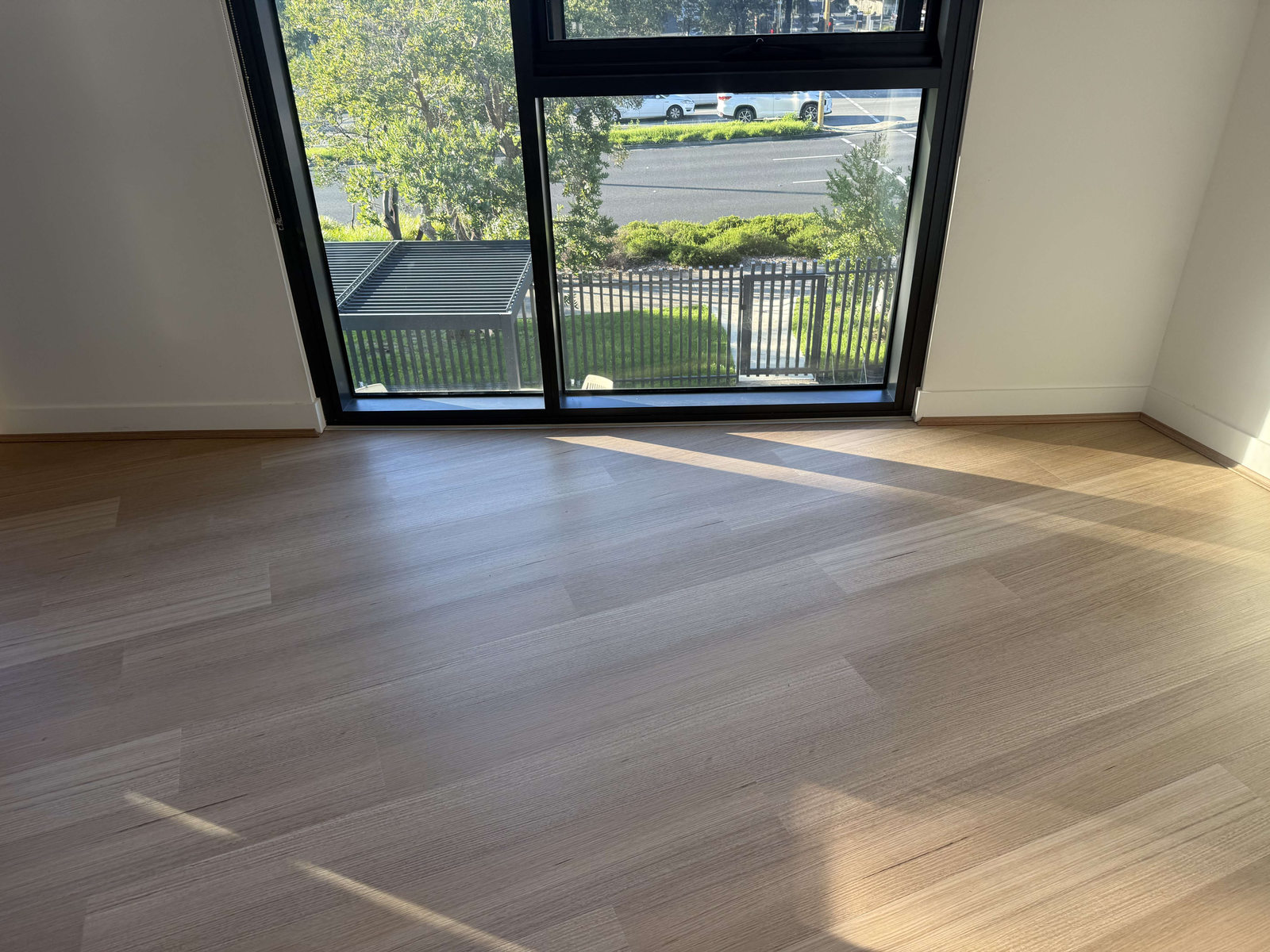
 A real Top Wood hybrid flooring project. Correct subfloor preparation and product-specific installation details are essential for long-term performance.
Hybrid flooring has become popular in Melbourne homes because of its timber-look finish, durable surfaces and water-resistant product options. However, hybrid flooring installation problems can occur when boards are laid over an unsuitable substrate or when the product manufacturer's instructions are not followed.
Common symptoms include lifting boards, gaps between planks, damaged click-lock joints, unwanted movement and moisture-related issues. The right remedy depends on the actual cause, not just how the floor looks.
At Top Wood Timber Flooring, we offer hybrid floor installation and flooring supply services in Melbourne, including subfloor assessment, preparation and finishing. This guide explains ten common risks and what to check before your floor is installed.
Key takeaway: Successful hybrid flooring installation begins with a sound, sufficiently dry, clean and flat subfloor, compatible underlay and the movement clearances required by the specific flooring manufacturer. Hybrid planks that resist spills can still have problems if moisture is trapped beneath the floor.
1 Hybrid Flooring Lifting or Buckling
Lifting, peaking or buckling can appear when a floating floor cannot move as intended. Even dimensionally stable rigid-core planks respond to temperature changes, especially near large windows and sliding doors.
Possible causes
- Insufficient expansion clearance at walls and fixed structures.
- Flooring trapped beneath cabinetry or heavy permanent fixtures.
- Missing movement joints where the manufacturer requires them.
- Heat exposure beyond the selected product's limits.
How to reduce the risk
Follow the product's specified perimeter gaps, maximum floor dimensions and transition requirements. Review strong afternoon sunlight and fixed cabinetry before laying boards; do not assume all hybrid brands need identical gaps.
Installer's tip: In Melbourne open-plan living areas, check temperature exposure near large glass doors before selecting the flooring system.
2 Gaps Appearing Between Hybrid Floorboards
Visible gaps at the ends or long edges of planks can result from temperature-related contraction, damaged locking profiles or excessive movement beneath the floor.
How to prevent gaps
- Inspect boards and locking profiles before installation.
- Prepare the subfloor to the manufacturer's flatness tolerance.
- Use the joining technique designed for the selected click system.
- Use only product-approved underlay and trims.
Gaps do not always prove poor workmanship. Product condition, temperature exposure and substrate movement should be assessed before deciding on repairs.
3 Uneven Subfloors and Unsupported Planks
Uneven subfloors are a major installation risk. Rigid hybrid boards still need adequate support; they cannot reliably bridge deep hollows, raised tile edges or moving timber boards. An unsuitable surface can produce clicking, movement or joint damage.
What flatness is required?
Manufacturer requirements come first. The 2025 Australasian Timber Flooring Association Vinyl Based Plank Technical Manual gives a general reference of no more than approximately 4 mm deviation beneath a 2-metre straightedge where manufacturer guidance is unavailable. Some products require tighter tolerances.
How installers prepare an uneven floor
- Check high and low spots using suitable straightedges.
- Assess concrete, tiles and timber-based substrates for stability.
- Rectify suitable high spots and use compatible levelling products where needed.
- Secure loose structural boards and address damaged or swollen joints.
- Remove unsuitable floor coverings and clean the substrate before installation.
See our guide to installing hybrid flooring over tiles, concrete and timber for substrate-specific considerations.
4 Clicking, Creaking or Hollow Sounds
Some footstep sound is normal with floating flooring. However, repeated clicking or noticeable vertical movement may indicate inadequate support, a moving substrate, unsuitable underlay or a damaged joint.
How to reduce unwanted movement
Check substrate flatness and stability before laying the floor. Avoid compensating for an uneven surface with extra cushioning: thick or unapproved underlay may increase vertical movement and stress the locking system.
5 Moisture Trapped Beneath Hybrid Flooring
Many hybrid boards have water-resistant or waterproof cores, but a waterproof plank does not make an entire floor system waterproof. Moisture beneath a floating floor may affect the subfloor, backing materials or other flooring components.
Potential moisture sources
- Moisture in a concrete slab or recently completed building work.
- Water entering at external doors or from plumbing leaks.
- Damp or poorly ventilated subfloor spaces.
- Incorrect vapour-control measures for the selected system.
How to prevent moisture-related failure
Investigate possible water ingress and assess substrate moisture before installation. Concrete may require appropriate testing; timber floors should be checked for dampness and structural condition. Use only the vapour barrier arrangement specified for the selected flooring product and site.
6 Direct Sunlight and Temperature Movement
Melbourne properties with broad glass doors and sun-facing rooms can expose planks to high surface temperatures. Hybrid products may expand or contract as temperatures change, and the risk varies by product.
How to reduce heat-related issues
Confirm the product's permitted temperature range, storage and acclimatisation instructions, movement clearances and any special requirements near windows. Suitable blinds or other heat-control measures may help where high solar exposure is expected.
7 Incorrect or Excessive Underlay
Many SPC hybrid planks already contain an attached acoustic underlay. Installing an additional soft layer without approval can increase cushioning and movement, which may stress the click-lock joints.
What underlay should be used?
Always check the flooring manufacturer's requirements. Some products require no extra cushioning; others specify a particular underlay, vapour-control layer or rigid sheet preparation. Acoustic requirements in apartments should also be checked before product selection.
8 Installing Over Unsuitable Existing Floors
Hybrid flooring can sometimes be laid over stable tiles, prepared concrete or suitable structural timber substrates. But existing flooring must be assessed, not assumed suitable.
What should be checked?
- Tiles: Check adhesion, cracks, raised edges, grout joints and overall flatness.
- Concrete: Check flatness, cleanliness, moisture and surface condition.
- Timber: Check movement, substrate condition, moisture and whether the manufacturer permits that substrate.
- Existing floating floors: Generally should not be used as the direct substrate for another floating system.
- Carpet and other soft coverings: Remove before installing rigid hybrid flooring.
9 Broken or Damaged Click-Lock Joints
Rigid hybrid planks rely on correctly engaged locking profiles. Damage during handling, forcing joints together or repeated movement above an uneven base can weaken these connections.
How to protect locking joints
Inspect boards before laying, use the specified assembly method and ensure the substrate supports the planks. If a joint repeatedly separates, investigate the underlying movement rather than simply reconnecting the same boards.
10 Missing Expansion Gaps and Transition Trims
Not every hybrid floor can run uninterrupted through an entire property. The need for movement joints depends on the product, room dimensions and floorplan.
Where might transitions be required?
- Doorways or long hallway runs.
- Changes in room shape and extensive open-plan areas.
- Existing structural movement joints.
- Transitions to another flooring surface.
Use suitable finishing trims to conceal required movement gaps without restricting flooring movement. Confirm the manufacturer's limits before planning a continuous installation.
Early Warning Signs of Hybrid Flooring Problems
Not every symptom means the entire floor needs replacement. However, an inspection is worth considering when you notice:
- New or widening gaps between boards.
- Localized lifting or raised joints.
- Excessive movement underfoot.
- Repeated clicking in the same area.
- Signs of moisture or damage around doorways and wet areas.
A suitable repair depends on the actual cause and condition of the subfloor, locking systems and planks. Some issues may be localised; others may need removal and substrate rectification.
Why Professional Hybrid Flooring Installation Matters
Good installation is more than joining boards. Appropriate product selection, site inspection, subfloor preparation, temperature assessment and finishing all contribute to long-term performance.
Top Wood Timber Flooring offers hybrid flooring installation in Melbourne, including installation-only jobs, selected supply-and-install packages, subfloor preparation and finishing trims for suitable residential and commercial properties.
How Much Does Hybrid Flooring Installation Cost in Melbourne?
Costs vary by floor area, product, subfloor condition, floor covering removal and required trims. Our indicative starting rates for qualifying jobs are:
| Service | Indicative starting price |
|---|
| Standard hybrid flooring installation only | From $23 + GST per m² |
| Selected 7 mm hybrid supply and installation | From $65 + GST per m² |
These are starting prices, not fixed quotes for every project. Minimum charges, levelling, removal and finishing can affect the final cost. For more detail, read our hybrid flooring installation cost guide.
Frequently Asked Questions
Why is my hybrid flooring lifting?
Common possibilities include restricted movement, heat exposure, insufficient gaps or an unsuitable subfloor. A site assessment is needed to identify the actual cause before repair.
Is it normal for hybrid flooring to have gaps?
Gaps can arise from temperature movement, installation details or joint damage. Widening or persistent gaps deserve closer inspection.
Can uneven hybrid flooring be repaired?
Sometimes. The fix depends on whether the issue is isolated or whether the subfloor requires broader correction. A professional should inspect the area before advising on repair or replacement.
Does hybrid flooring need expansion gaps?
Floating hybrid floors generally require perimeter clearances. The exact gap dimensions and movement joint locations depend on the manufacturer's instructions.
Can water damage hybrid flooring?
Even when the plank core resists moisture, water can affect the substrate and other flooring components. Any water ingress or dampness beneath the floor should be investigated.
Can hybrid flooring be installed over old tiles?
Often yes, if the product allows it and the tiles are firmly bonded, stable and suitably flat. Grout lines or raised areas may need preparation first.
Why does my hybrid flooring click when I walk on it?
Clicking can be linked to movement in the subfloor, unsupported boards, unsuitable underlay or locking-joint problems. Sound alone does not establish the cause.
Should I add extra underlay under hybrid flooring?
Only when the manufacturer permits or requires it. Many hybrid boards already have attached underlay, and an extra soft layer can create excessive movement.
Need Hybrid Floor Installers in Melbourne?
Top Wood Timber Flooring installs hybrid flooring for homes, renovations and suitable commercial projects across Greater Melbourne, including Mooroolbark, Ringwood, Croydon, Mitcham, Doncaster, Glen Waverley, Berwick and Dandenong. Talk to us about your existing floor and the preparation your project may require.
Technical reference: Australasian Timber Flooring Association, Vinyl Based Plank Technical Manual (2025). This article provides general guidance; the selected product manufacturer's instructions, site conditions and applicable building requirements take precedence. Technical material has been summarised in original wording.